1. The Sunset Of Our Soul
    Comment
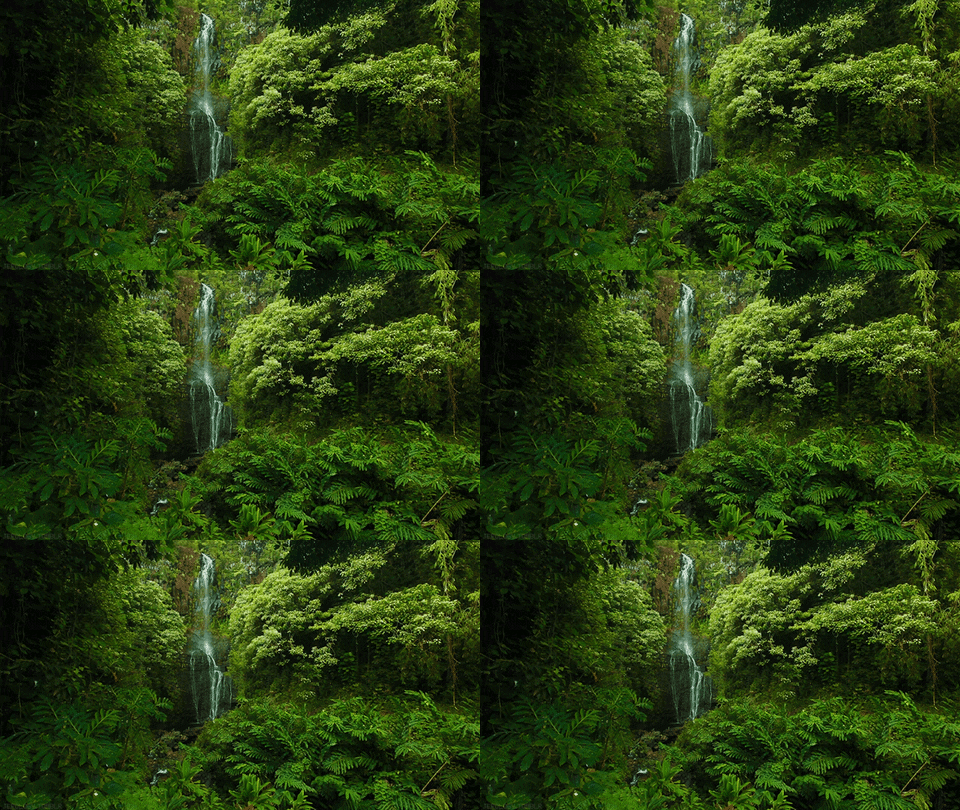
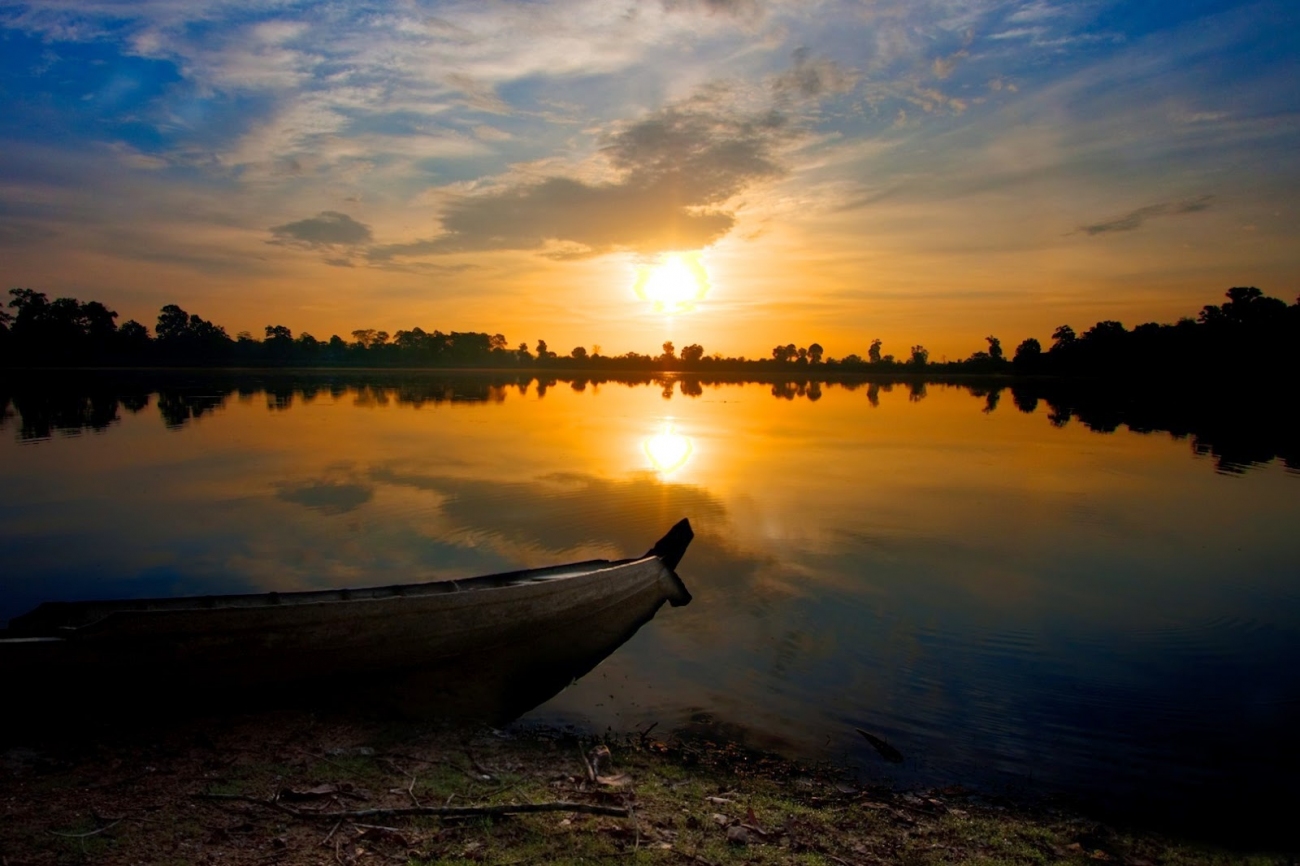
    Sunrise at Sraas Srang, Siem Reap, Cambodia

    By Lance Ekum, Jungle of life

    There’s a sun­set within the soul of each of us. Have you lis­tened to your heart and your soul? 

    This sun­set within each of us…it’s there.  We just have to find it.  Maybe it’s over­cast in the world of you today.  Maybe it has been for a while.  Or maybe it’s a full-fledged storm.  In either case, when our sun­set within is blocked, we are not being com­pletely authen­tic and true to our­selves.  And we’re not liv­ing a life that is con­nect­ing with our deep­est being.

    What keeps it hidden?

    • Doing what we’re told is the right thing to do
    • Pur­suit of the pay­check over the heart
    • Not lis­ten­ing to that voice inside
    • Going through the motions of life

    Telling our­selves that some­day we’ll pur­sue our dreams (does some­day ever come?)
    When we allow any on this list to be the pre­vail­ing force in our life, we sup­press that sun­set that is within.  And all of this is not to say that some­times we might have to do things for rea­sons our heart does not agree.  There will be unex­pected storms that come into our life — and it may mean doing some­thing that isn’t nec­es­sar­ily in line with what our heart speaks.

    Life hap­pens.

    Still, though, it doesn’t mean we have to be locked into these choices.  Even in the midst of an unex­pected storm, or for that mat­ter, a period of much cloudi­ness in our life — we can still  search for the sun­set within.

    It’s there.

    “Twenty years from now you will be more dis­ap­pointed by the things that you didn’t do than by the ones you did do. So throw off the bow­lines. Sail away from the safe har­bor. Catch the trade winds in your sails. Explore. Dream. Dis­cover.” ~ Mark Twain

    Take some time to really lis­ten to your heart.  Explore what mat­ters deeply to you.

    Your Sun­set

    We have this one life here on earth that we’re liv­ing.  How are you choos­ing to live that life out?

    Don’t wait for some­day…it’s a day that may never come.

    “Today is your day! Your moun­tain is wait­ing. So… get on your way.” ~ Dr. Seuss

    What can you do, today, that will take you one step closer toward that amaz­ing sun­set within your soul?  And if you’re there already, what can you do to keep that sun­set shin­ing , illu­mi­nat­ing your life and all you do?

    You are amaz­ing — each and every one of you!  And when you allow your heart-filled sun­set to shine onto the world, that light and all it’s mag­i­cal col­ors will fill the world around you with the pas­sion you have within the depths of your soul.
  2. Famous giant tortoise ‘Pepe the Missionary’ who became one of the most photographed animals on the Galapagos dies aged 60

    Comment

    By CHRIS PLEASANCE FOR MAILONLINE
    August 23, 2014

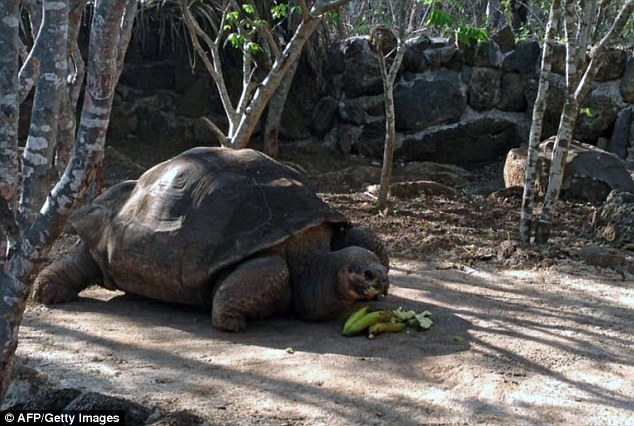
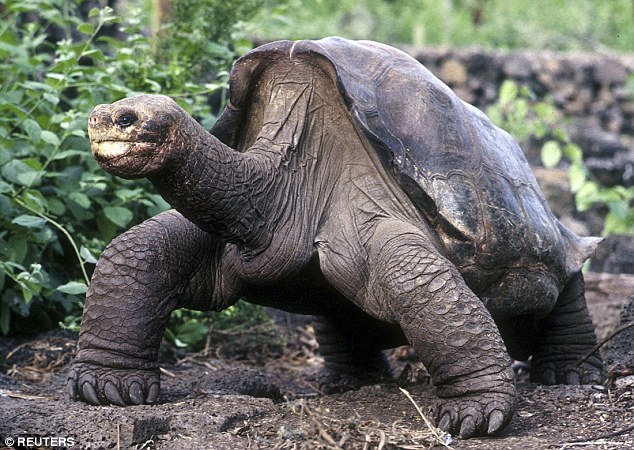
    A giant tortoise known as ‘Pepe the missionary’ after he spent time living with Franciscan missionaries on the Galapagos islands has died aged 60.

    During his life Pepe became famous as a mascot for the missionaries and was a favourite with tourists who came to visit and take photographs with him.

    Pepe, who ended his days in a corral at the Galapagos National Park’s
    Interpretation Center, died yesterday of natural causes, said the park
    ecosystems director Victor Carrion.

    After the death of Lonesome George (pictured), who passed away at an
    estimated age fo 100 in 2012, the missionaries
    handed Pepe over to the
    Galapagos National Park’s Interpretation Center

    Pepe was first adopted from the wild by by a family from San Cristobal island in the 1940s before being given over to the mission in 1967.

    He lived there until 2012 when he was given over to the national park following the death of Lonesome George, another giant tortoise who was thought to be the last of his species left.

    George was thought to be around 100 years old when he passed away, which only made him a young adult, as the species can live up to 200 years old.

    While it is not known exactly why Pepe died at such a young age, Mr Carrion  said that several of his organs had been slowly failing, adding that Pepe was also overweight.

    Pepe the tortoise, who became famous as the mascot for Franciscan missionaries in the Galapagos Islands,
    has died aged 60 of natural causes

    Park director Arturo Izurieta paid tribute to the tortoise on Twitter, saying: ‘After 60 years of life, Pepe the Missionary will remain in our memories forever.

    ‘The disappearance of Pepe the tortoise does not put his species in danger.’

    Pepe was a member of the Chelonoidis becki species native to Wolf Volcano on the island of Isabela.
    About 2,000 tortoises from the same species still live in their native habitat.

    The Galapagos Islands are famous for their unique flora and fauna studied by Charles Darwin as he developed his theory of evolution.

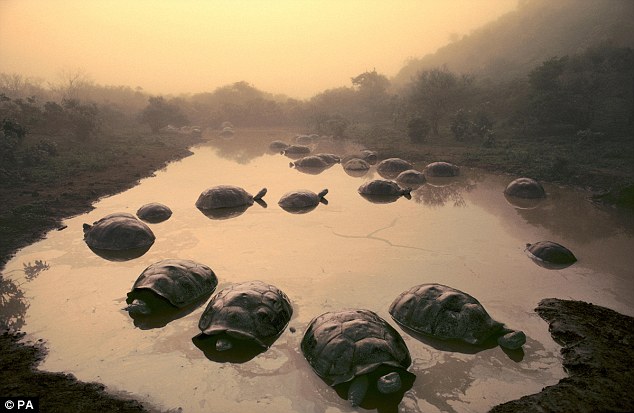
    Giant tortoises still exist in the wild on the Galapagos islands, near
    Ecuador. The unique and diverse range of flora
    and fauna on the islands
    were studied by Darwin as he developed his theory of evolution

  3. Buddhist nonattachment

    Comment

    Impartial to all, free from excessive attachment or false hope and expectation; accepting, tolerant, and forgiving. Buddhist nonattachment doesn’t imply complacence or indifference, or not having committed relationships or being passionately engaged with society, but rather has to do with our effort to defy change and resist the fact of impermanence and our mortality. By holding on to that which in any case is forever slipping through our fingers, we just get rope burn. ~Lama Surya Das

  4. Peruvian nurse cares for 175 sick cats

    Comment

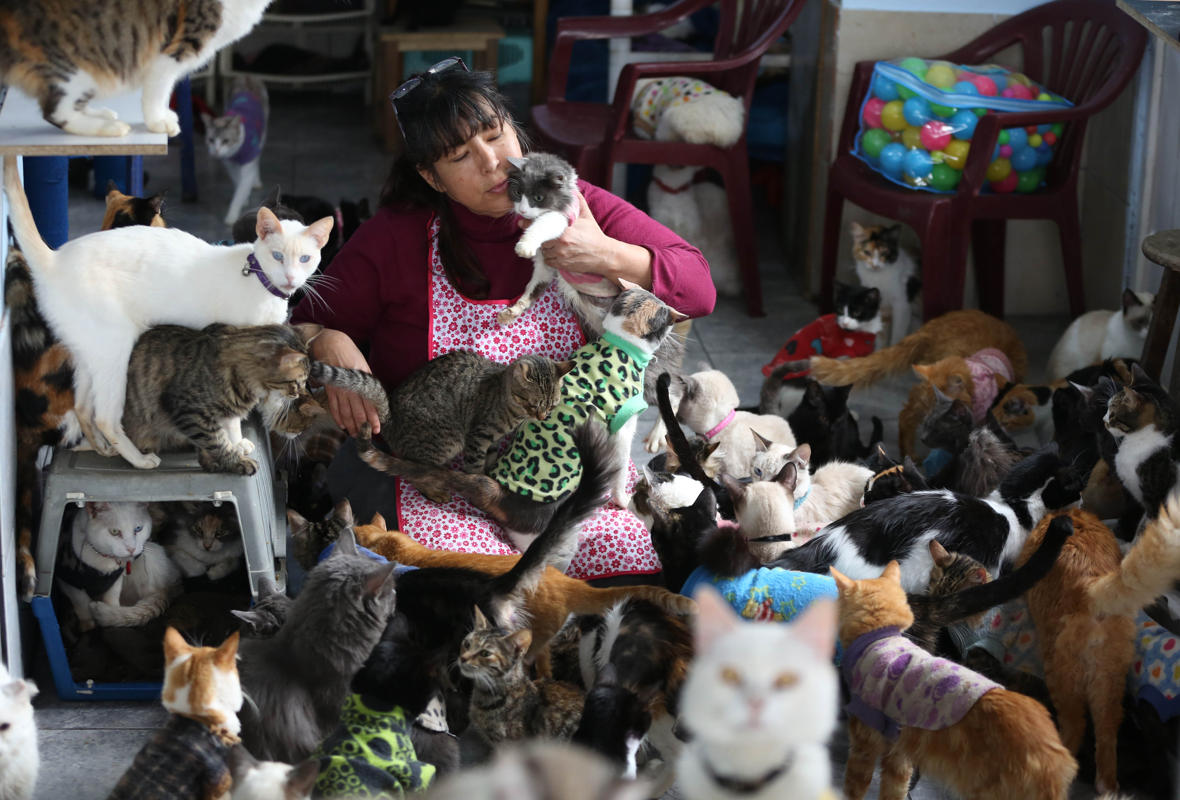
    At her job, Maria Torero cares for sick human beings. At home, she lavishes love on slowly dying cats — 175 of them at last count.

    The 45-year-old nurse has turned her two-story, eight-room apartment into a hospice for cats with feline leukemia, scattering it with scores of feeding dishes and at least two dozen boxes litter boxes.
    Some have suggested she shelter healthy cats instead. “That’s not my role,” she told The Associated Press. “I’m a nurse. My duty is to the cats that nobody cares about.”

    She said that “people don’t adopt adult cats, especially if they are terminally ill.” (AP)


    In this Aug. 2, 2014 photo, Maria Torero, plays with a group of 175 cats
    with leukemia in her home in Lima, Peru. Torero says caring for cats
    with feline leukemia is her responsibility. Anybody else can care for
    healthy animals. (AP Photo/Martin Mejia)

  5. Water the seeds of anger within us

    Comment

    Though we all have the fear and the seeds of anger within us,
    we must learn not to water those seeds and instead nourish
    our positive qualities – those of compassion, understanding,
    and loving kindness.
    ~Thich Nhat Hanh

  6. A smile is the light in your window…

    Comment

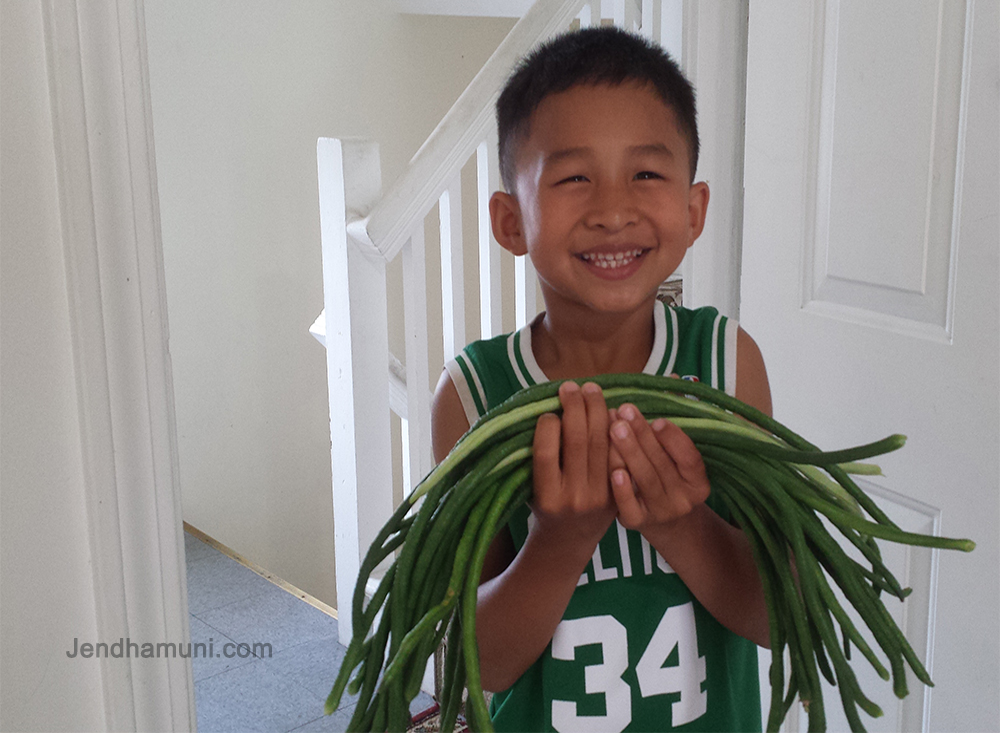
    The very first time AJ knocked on my door and brought me many string beans, with a big smile!
    “A smile is the light in your window that tells others that there is a caring, sharing person inside.”  ~Denis Waitley

  7. Hot fashion!

    Comment

    Kyle and Max at the camp, day 1. They stay there three days.
    Hmmm…. I have no clue why Kyle dressed up like this!
    Max looks bored, Kyle looks lost!

  8. Someone stole one of my Lotus plants already

    Comment

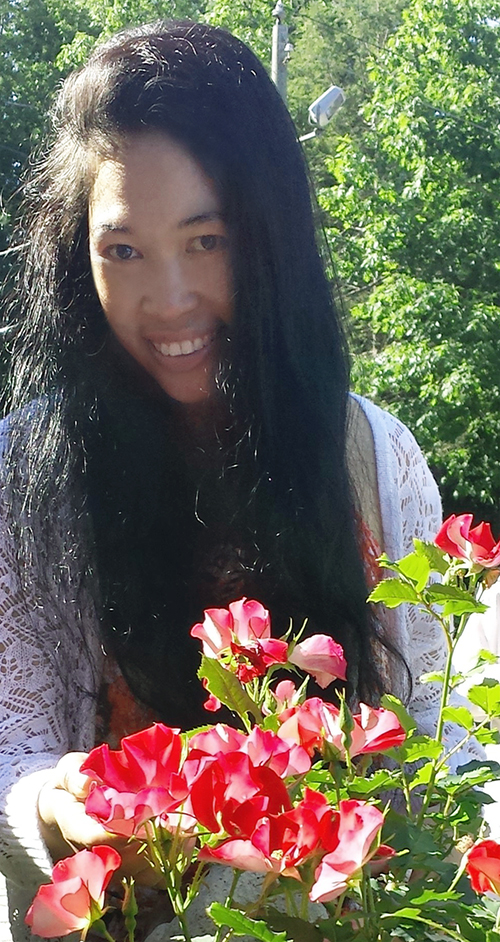
    The lady only sold us two lotus plants, after begging her to sell them to us for many days, maybe months! Now, one has been stolen already, especially the large and beautiful and healthy one. I have been waiting for the flower to appear right before my eyes, as pink as the shirt I am wearing, as a surprise to make my smile more beautiful and meaningful. Well, I love pink and pink lotus so much, that’s why I wear pink almost every day. And I wear yellow too, of course, not just pink! Well, my plant is so beautiful. Cannot blame the person who stole it, or took it without our permission. Who does not love that super gorgeous green plant! I would cry if, and only if I know how to cry. The problem is, I was born to smile, and I only know how to smile!

    Well, whoever took my lotus plant, please take good care of it. You must keep your eyes on this gorgeous plant wide open, in case someone else would sneak in to take that a way, same way you did to Jendhamuni.

  9. Humans Have Created A New Top Predator That Is Taking Over The Northeast

    Comment

    By Jennifer Welsh, Business Insider
    August 22, 2014

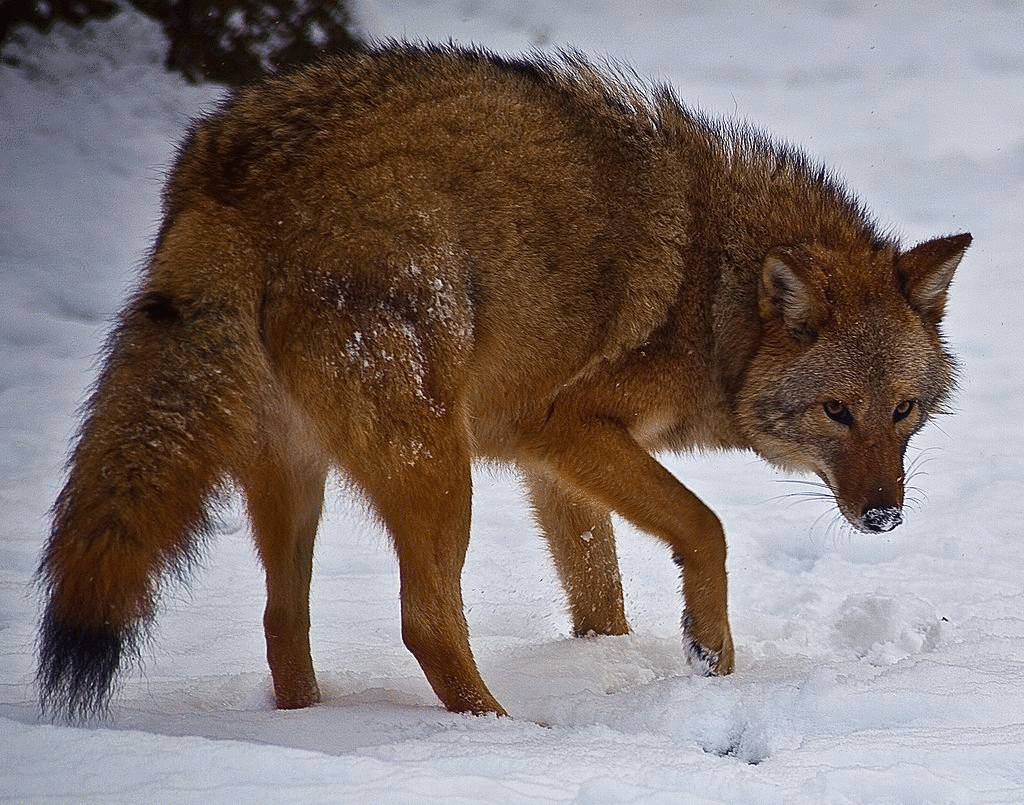
    Humans are no newcomers when it comes to messing around with nature. While we haven’t created Frankenstein’s monster yet, what we do messes with the natural world. One recent example is the creation of the coywolf — a hybrid of the coyote and the wolf that is also known as the Eastern coyote.

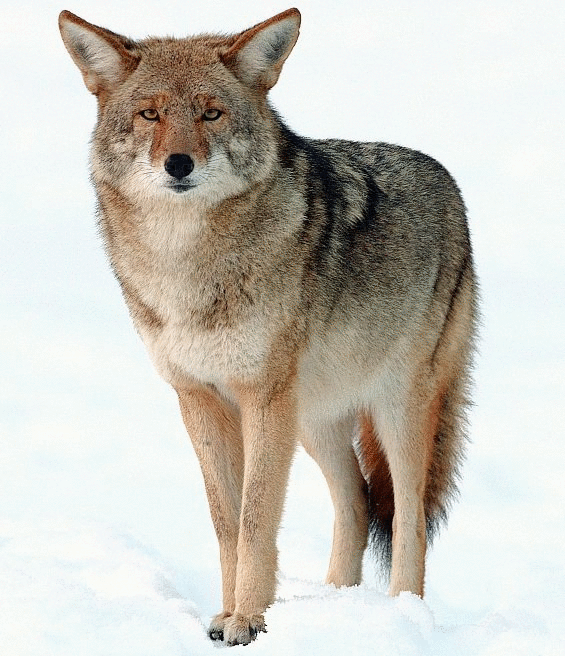
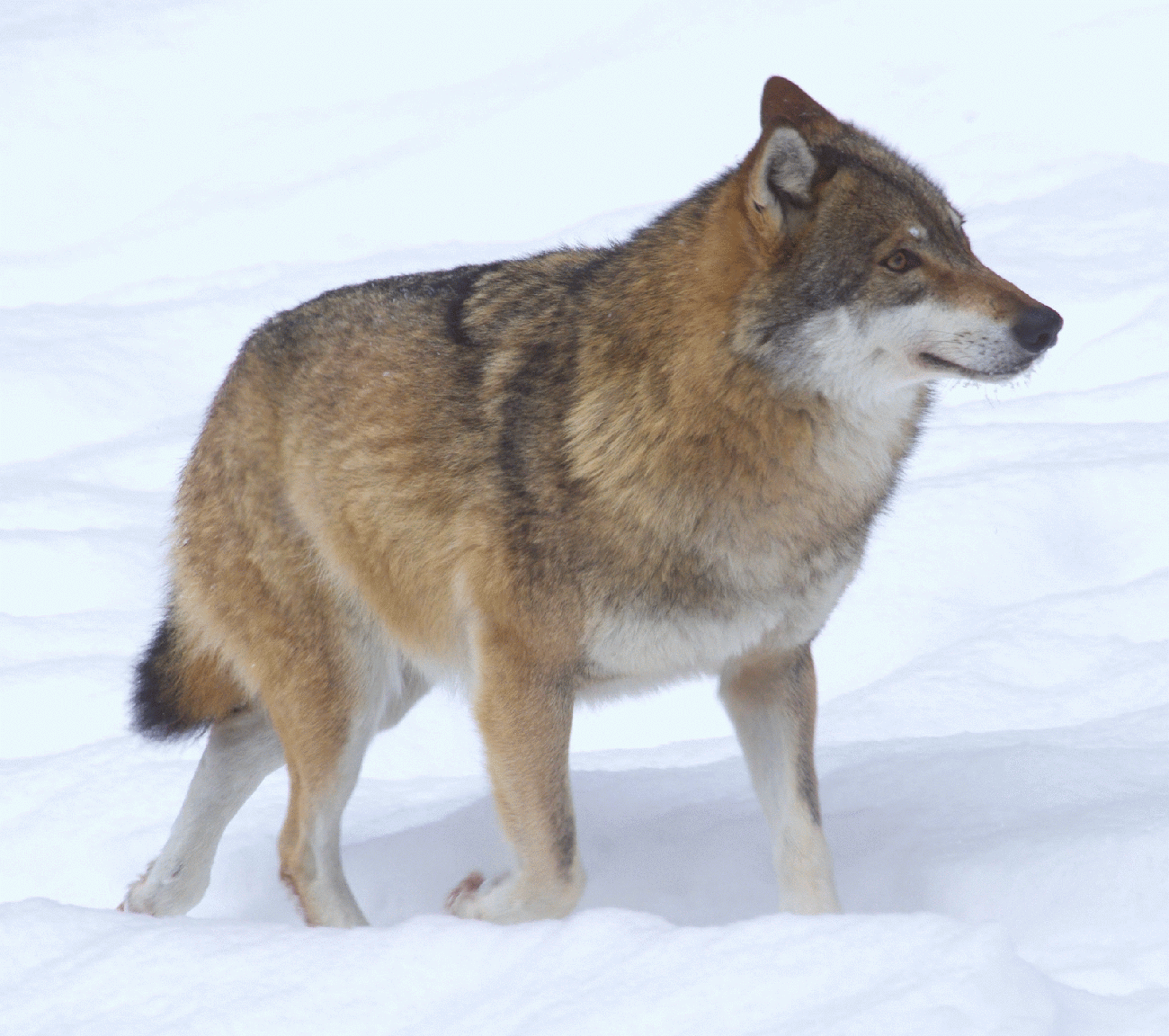
    These animals have a completely new genetic make up: Their genes are about 1/4 wolf DNA and 2/3 coyote DNA, the rest is from domesticated dogs. They were created when previously separate wolf and coyote populations merged in the land north of the Great Lakes.

     Here’s the coyote, which traditionally maxes out at 75 pounds and has pointier features, and readily populates cities:

    And this is what a wolf looks like. Wolves, are usually bigger, weighing in at about 100 pounds, and prefer more wild habitats.

    While the grey wolf and the coyote are each other’s closest living
    relatives, the two animals separated evolutionarily one to two million
    years ago. These hybrids have only really emerged en force during the
    last few decades, as wolves were hunted and forced north and coyotes
    moved east from the Great Plains.

    According to the New York Times’ Moises Velazquez-Manoff: “[The
    coywolf] can be as much as 40 percent larger than the Western coyote,
    with powerful wolflike jaws; it has also inherited the wolf’s more
    social nature, which allows for pack hunting.”

    Specifically,
    this genetic combination of the two animals seems especially well
    suited to its northern habitat — better suited than either parent
    species. The wolf genes allow the coyote to take down bigger prey, while
    the coyote genes let them adapt to cityscapes and other metropolitan
    areas.

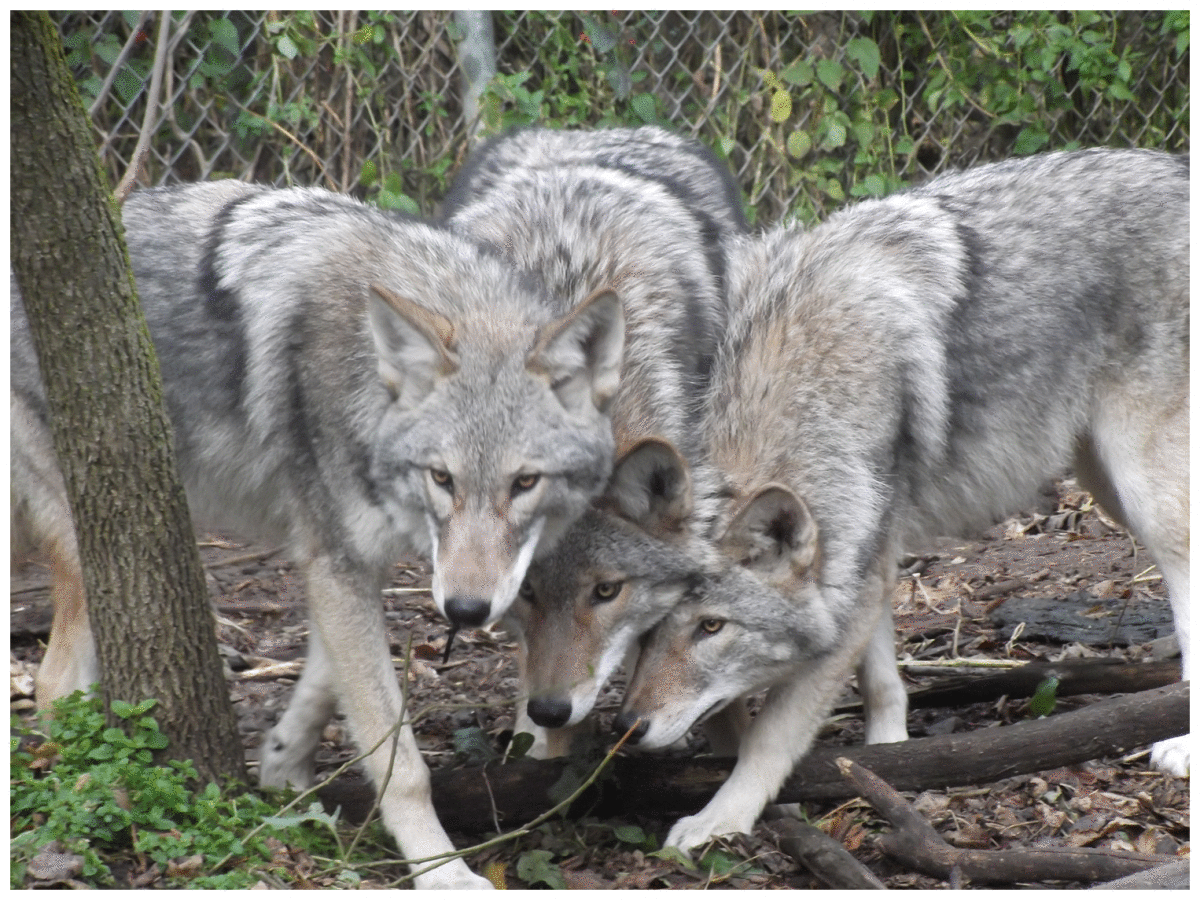
    To study the hybrids better, scientists went
    ahead and made some 50/50 hybrids in the lab, mating female coyotes with
    male grey wolves. That’s not exactly like the wild coywolves, but it’s
    similar. And gives scientists a better idea of how successful a mating
    between the two species would be. While two pregnancies didn’t result in
    live offspring, one litter created six puppies.

    Here’s the result:

    Generally the hybridization of species gives evolution something to work with to deal with tough times. When food is low because of climate change or your habitat is being destroyed by humans, these animals can turn out to be tougher or more adaptable than their parent species (though many aren’t and many turn out to be sterile).

    So, how did these hybrids come to be? Well, as Velazquez-Manoff writes in the New York Times magazine:

    The emergence of the Eastern coyote, however, shows how human activity can break down the barriers that separate species. Perhaps the most obvious way in which humanity is altering the natural world is through climate change. The Arctic, where its effects are especially evident, is warming between two and four times as fast as the rest of the planet. Spring thaws now arrive weeks earlier; winter freezes come weeks later. Shrubs are invading once-barren tundra. Animals at high latitudes — where related species tend to have diverged more recently and can therefore interbreed more easily — are shifting their ranges in response to rising temperatures and melting sea ice. As they do, they may encounter cousins and hybridize.

    This is what a wild coywolf looks like. This one was spotted in West Virginia.

Live & Die for Buddhism

candle

Me & Grandma

My Reflection

This site is a tribute to Buddhism. Buddhism has given me a tremendous inspiration to be who and where I am today. Although I came to America at a very young age, however, I never once forget who I am and where I came from. One thing I know for sure is I was born as a Buddhist, live as a Buddhist and will leave this earth as a Buddhist. I do not believe in superstition. I only believe in karma.

A Handful of Leaves

A Handful of Leaves

Tipitaka: The pali canon (Readings in Theravada Buddhism). A vast body of literature in English translation the texts add up to several thousand printed pages. Most -- but not all -- of the Canon has already been published in English over the years. Although only a small fraction of these texts are available here at Access to Insight, this collection can nonetheless be a very good place to start.

Major Differences

Major Differences in Buddhism

Major Differences in Buddhism: There is no almighty God in Buddhism. There is no one to hand out rewards or punishments on a supposedly Judgement Day ...read more

Problems we face today

jendhamuni pink scarfnature

Of the many problems we face today, some are natural calamities and must be accepted and faced with equanimity. Others, however, are of our own making, created by misunderstanding, and can be corrected...