
1. National Geographic 2014 Hybrid Giant Pythons found in Florida Documentary

    Comment

    ‘Florida Untamed’ shows wild side of paradise on Nat Geo WILD

    Examiner.com, April 23, 2014

    “Florida Untamed” is a two-part special debuting on Nat Geo WILD on Sunday, April 27, 2014 according to a press announcement emailed by NGC on April 21. “Destination Wild,” by 2C Media, takes viewers to the depths of Florida’s treacherous swamplands, coastal shores and marine reefs to showcase wild animals and landscapes.

    Just beyond the famed theme parks, poolside resorts and sunny beaches of Florida lie ruthless predators hungry for a kill. The swamps are no playground for most animals living there, including American crocodiles, alligators, Burmese pythons, sea turtles and rattlesnakes. The fierce paradise is a dangerous landcape where any moment could be the animals’ last. Witness the dramas unfold on a journey through a labyrinth of ancient cypress swamps and crowded shores, capturing miraculous sights that never cease to amaze. It’s treacherous; it’s venomous; it’s Florida Untamed.

    Two one-hour back-to-back specials reveal a spectacular array of terrifying predators, perilous invaders and sly survivors as they struggle to live and thrive in this stunning yet violent habitat. No matter how big or small, all creatures here share one common goal: survival. There’s no shortage of animals on the hunt in Florida, from vulnerable crayfish to sneaky bullfrogs, poisonous pit vipers and camouflaged crocodiles. It’s a merciless fight to survive. Viewers gets a front row seat to all the action.

    The battle rages on among a cast of unforgiving characters. Follow three young gator hatchlings as they struggle to survive their first year in the swamp. While their elders rule the waterways, these little guys must elude a wide array of killers, including venomous snakes, voracious predatory fish and even their own kind. On the bustling shores and among the strong currents of the Gulf Stream there is another ruthless paradise. Here, young turtle hatchlings begin an epic and risky odyssey from deadly shores to the open Atlantic, as crocodiles patrol the coral shores of south Florida looking for an effortless meal. Life on Florida’s dangerous coast is no day at the beach..

    Gator Country premieres Sunday, April 27, 2014 (8 p.m ET/PT). Florida’s swamps are not only a stunning landscape of drama, mystery and beauty, but they are the home of the lizard king. Journey into the secret wetlands of Florida as we follow three juvenile gators on a fight for survival as they work to outmaneuver their abundant foes in a distressing game of life or death. Before they regain the waters, alligator hatchlings face harsh odds. Only one in 10 will survive, as venomous snakes, cannibal alligators and rotund bullfrogs lurk at every turn in the hopes of gobbling up a baby alligator. It’s survival of the fittest to the extreme.

    Florida Untamed: Croc Coast premieres Sunday, April 27, 2014 (9 p.m. ET/PT). The coral islands, lush mangroves and sandy beaches of the Florida coastline may seem pleasant. But for its wild inhabitants coping with continued development, human encroachment and a host of natural predators, the edge of the sea is a paradise filled with peril. Crocs may have outlasted the dinosaurs, but now they face a different kind of pressure. Coastal development has moved in on them, dramatically altering habitats. But crocs aren’t the only ones residing on this land. Witness an eastern diamondback rattlesnake on its hunt to kill, loggerhead turtle hatchlings beginning their frightening journey to the sea and the deadly monsters of the world’s third-largest living coral reef.

    Florida Untamed is produced by 2C Media Inc. for Nat Geo WILD. Executive producers for 2C Media Inc. are Carla Kaufman-Sloan, Chris Sloan, Jeff Morales and Calvin Simmons. For Nat Geo WILD, executive producer is Jenny Apostol, senior vice president of development and production is Janet Han Vissering, and executive vice president and general manager is Geoff Daniels.
  2. Killer Whale Vs Great White (National Geographic WILD)

    Comment

    Amazing footage of a Killer Whale (Orca) attacking and partially eating a Great White shark, filmed by a whale watching tourist. During a whale watching trip for tourists near the marine sanctuary of the Farallon Islands, a Killer Whale was spotted and filmed as it broke the surface with a Great White shark gripped in its jaws. This was not only the first filming of such an incident, but also the first time marine biologists had even heard of such an attack. This incident lead to further research on the subject, finally convincing marine biologists that the Killer Whale was the top predator in all the oceans.

    Killer whales are very sophisticated and effective predators. Thirty-two cetacean species have been recorded as killer whale prey, from examining either stomach contents, scarring on the prey’s body, or feeding activity. Groups even attack larger cetaceans such as minke whales, gray whales, and rarely sperm whales or blue whales.

    Hunting large whales usually takes several hours. Killer whales generally choose to attack young or weak animals, instead. However, a group of five or more may attack a healthy adult. When hunting a young whale, a group chases it and its mother until they wear out. Eventually, they separate the pair and surround the calf, preventing it from surfacing to breathe, drowning it. Pods of female sperm whales sometimes protect themselves by forming a protective circle around their calves with their flukes facing outwards, using them to repel the attackers. Rarely, large killer whale pods can overwhelm even adult female sperm whales. Adult bull sperm whales, which are large, powerful and aggressive when threatened, and fully grown adult blue whales, which are possibly too large to overwhelm, are not believed to be prey for killer whales.

    Other marine mammal prey species include nearly 20 species of seal, sea lion and fur seal. Walruses and sea otters are less frequently taken. Often, to avoid injury, killer whales disable their prey before killing and eating it. This may involve throwing it in the air, slapping it with their tails, ramming it, or breaching and landing on it. Sea lions are killed by head-butting or after a stunning blow from a tail fluke. In the Aleutian Islands, a decline in sea otter populations in the 1990s was controversially attributed by some scientists to killer whale predation, although with no direct evidence. The decline of sea otters followed a decline in harbour seal and Steller sea lion populations, the killer whale’s preferred prey,[Note 1] which in turn may be substitutes for their original prey, now decimated by industrial whaling.

    In steeply banked beaches off Península Valdés, Argentina, and the Crozet Islands, killer whales feed on South American sea lions and southern elephant seals in shallow water, even beaching temporarily to grab prey before wriggling back to the sea. Beaching, usually fatal to cetaceans, is not an instinctive behavior, and can require years of practice for the young. “Wave-hunting” killer whales spy-hop to locate Weddell seals, crabeater seals and leopard seals resting on ice floes, and then swim in groups to create waves that wash over the floe. This washes the seal into the water, where other killer whales lie in wait.

    Killer whales have also been observed preying on terrestrial mammals, such as deer and moose swimming between islands off the northwest coast of North America. Killer whale cannibalism has also been reported based on analysis of stomach contents, but this is likely to be the result of scavenging remains dumped by whalers. One killer whale was also attacked by its companions after being shot. Although resident killer whales have never been observed to eat other marine mammals, they occasionally harass and kill porpoises and seals for no apparent reason.

  3. The reflection of our inner lives

    Comment

    According to Buddhism, everything around us, including work and family relationships, is the reflection of our inner lives. Everything is perceived through the self and alters according to the individual’s inner state of life. Thus, if we change ourselves, our circumstances will inevitably change also.

    This is a liberating concept as it means that there is no need to seek enlightenment outside ourselves or in a particular place. Wherever we are, in whatever circumstances, we can bring forth our innate Buddhahood, thus transforming our experience of our environment into “the Buddha’s land”–a joy-filled place where we can create value for ourselves and for others.

    Courtesy April 1998 SGI Quarterly

  4. Kingdom of God or the Pure Land of the Buddha

    Comment

     Dell
    When we look deeply into ourselves, we can identify elements of the Kingdom of God that are available in the here and now. To me the Kingdom of God or the Pure Land of the Buddha is not a vague idea; it is a reality. That pine tree standing on the mountain is so beautiful, solid, and green. To me the pine tree belongs to the Kingdom of God, the Pure Land of the Buddha. Your beautiful child with her fresh smile belongs to the Kingdom of God, and you also belong to the Kingdom of God.

    If we’re capable of recognizing the flowing river, the blue sky, the blossoming tree, the singing bird, the majestic mountains, the countless animals, the sunlight, the fog, the snow, the innumerable wonders of life as miracles that belong to the Kingdom of God, we’ll do our best to preserve them and not allow them to be destroyed. If we recognize that this planet belongs to the Kingdom of God, we will cherish and protect it so we can enjoy it for a long time, and so that our children and their children will have a chance to enjoy it.

    The Buddha teaches us about the cycle of samsara, a cycle in which the same suffering repeats itself. If we don’t practice, we won’t be able to step out of it.

    ~Thich Nhat Hanh

  5. Reasons You Should Spend More Time Alone

    Comment

    Solitude helps to improve concentration and increase productivity. When you remove as many distractions and interruptions as you can from your day, you are better able to concentrate, which will help you get more work done in a shorter amount of time.

    Solitude gives you an opportunity to discover yourself and find your own
    voice. When you’re a part of a group, you’re more likely to go along
    with what the group is doing or thinking, which isn’t always the actions
    you would take or the decisions you would make if you were on your own.

    Solitude
    can enhance the quality of your relationships with others. By spending
    time with yourself and gaining a better understanding of who you are and
    what you desire in life, you’re more likely to make better choices
    about who you want to be around. You also may come to appreciate your
    relationships more after you’ve spent some time alone.

    Source: psychologytoday

  6. Be humble and you will never be disturbed…

    Comment

    There is much suffering in the world – physical, material, mental. The suffering of some can be blamed on the greed of others. The material and physical suffering is suffering from hunger, from homelessness, from all kinds of diseases. But the greatest suffering is being lonely, feeling unloved, having no one. I have come more and more to realize that it is being unwanted that is the worst disease that any human being can ever experience.

    If you are discouraged it is a sign of pride, because it shows you trust in your own powers. Never bother about other people’s opinions. Be humble and you will never be disturbed. Remember St. Aloysius, who said he would continue to play billiards even if he knew he was going to die. Do you play well? Sleep well? Eat well? These are duties. Nothing is small for God. ~ Mother Theresa

  7. Be humble and you will never be disturbed

    16

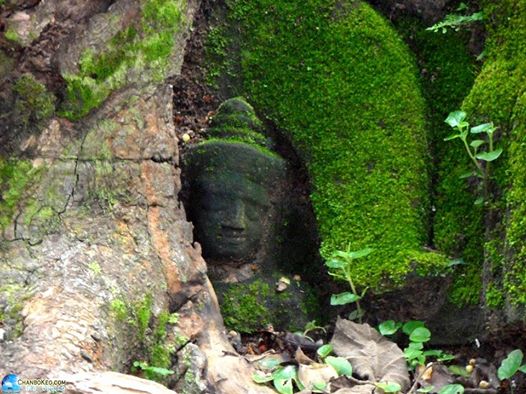
    Extraordinary statue in my country, Cambodia
    There is much suffering in the world – physical, material, mental. The suffering of some can be blamed on the greed of others. The material and physical suffering is suffering from hunger, from homelessness, from all kinds of diseases. But the greatest suffering is being lonely, feeling unloved, having no one. I have come more and more to realize that it is being unwanted that is the worst disease that any human being can ever experience.

    If you are discouraged it is a sign of pride, because it shows you trust in your own powers. Never bother about other people's opinions. Be humble and you will never be disturbed. Remember St. Aloysius, who said he would continue to play billiards even if he knew he was going to die. Do you play well? Sleep well? Eat well? These are duties. Nothing is small for God. ~ Mother Theresa

    http://leelavadeeflower.blogspot.com/2014/08/be-humble-and-you-will-never-be.html

  8. Music begins, where words leave off…

    Comment

    “Music is the moonlight in the gloomy night of life.” ― Friedrich Richter
    “Music acts like a magic key, to which the most tightly closed heart opens.” ― Maria von Trapp
    “Music is the language of the spirit. It opens the secret of life bringing peace, abolishing strife.”
    ― Khalil Gibran

Live & Die for Buddhism

candle

Me & Grandma

My Reflection

This site is a tribute to Buddhism. Buddhism has given me a tremendous inspiration to be who and where I am today. Although I came to America at a very young age, however, I never once forget who I am and where I came from. One thing I know for sure is I was born as a Buddhist, live as a Buddhist and will leave this earth as a Buddhist. I do not believe in superstition. I only believe in karma.

A Handful of Leaves

A Handful of Leaves

Tipitaka: The pali canon (Readings in Theravada Buddhism). A vast body of literature in English translation the texts add up to several thousand printed pages. Most -- but not all -- of the Canon has already been published in English over the years. Although only a small fraction of these texts are available here at Access to Insight, this collection can nonetheless be a very good place to start.

Major Differences

Major Differences in Buddhism

Major Differences in Buddhism: There is no almighty God in Buddhism. There is no one to hand out rewards or punishments on a supposedly Judgement Day ...read more

Problems we face today

jendhamuni pink scarfnature

Of the many problems we face today, some are natural calamities and must be accepted and faced with equanimity. Others, however, are of our own making, created by misunderstanding, and can be corrected...