

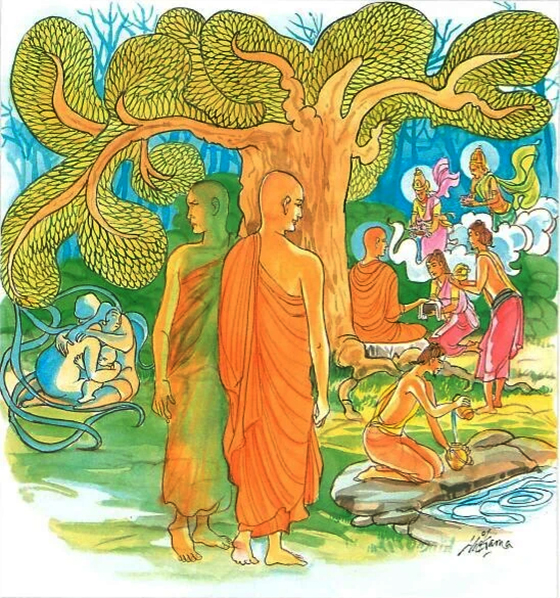
Verse 209: He who does what should not be done and fails to do what should be done, who forsakes the noble aim of life (i.e., Morality, Concentration and Insight) and grasps at sensual pleasure, covets the benefits gained by those who exert themselves (in meditation).
Verse 210: Do not associate with those who are dear, and never with those who are not dear to you; not seeing the dear ones is painful, and seeing those who are not dear to you is also painful.
Verse 211: Therefore, one should hold nothing dear; separation from the loved ones is painful; there are no fetters for those who do not love or hate.
The Story of Three Ascetics
While residing at the Jetavana monastery, the Buddha uttered Verses (209), (210) and (211) of this book, with reference to a trio, consisting of a father, a mother and a son.
Once in Savatthi, the only son of a family first became a bhikkhu; the father followed suit and finally, the mother also became a bhikkhuni. They were so attached to one another that they rarely stayed apart. The family stayed in the monastery as if they were in their own house, talking and eating together, thus making themselves a nuisance to others. Other bhikkhus reported their behaviour to the Buddha and he called them to his presence, and said to them, “Once you have joined the Order, you should no longer stay together like a family. Not seeing those who are dear, and seeing those who are not dear to one, are both painful; so you should not hold any being or anything dear to you”.
Then the Buddha spoke in verse as follows:
Verse 209: He who does what should not be done and fails to do what should be done, who forsakes the noble aim of life (i. e., Morality, Concentration and Insight) and grasps at sensual pleasure, covets the benefits gained by those who exert themselves (in meditation).
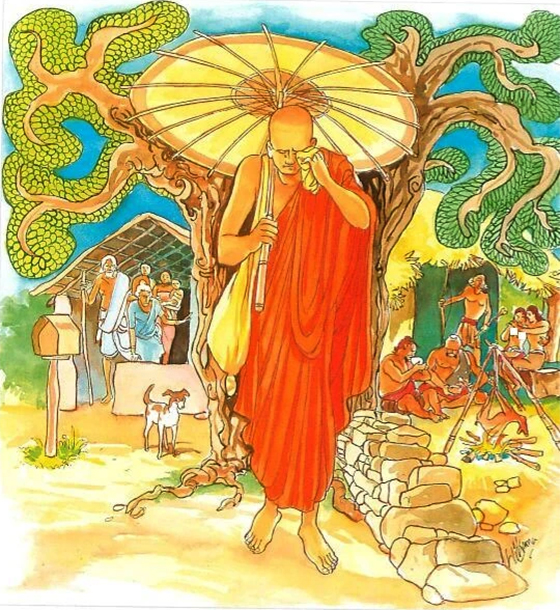
Verse 210: Do not associate with those who are dear, and never with those who are not dear to you; not seeing the dear ones is painful, and seeing those who are not dear to you is also painful.
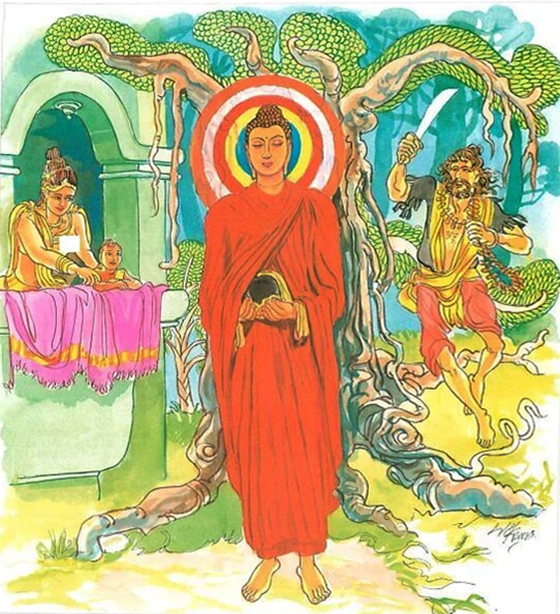
Verse 211: Therefore, one should hold nothing dear; separation from the loved ones is painful; there are no fetters for those who do not love or hate.
Dhammapada Verses 209, 210 and 211
Tayojanapabbajita Vatthu
Ayoge yunja’mattanam
yogasminca ayojayam
attham hit va piyaggahi
piheta’ttanuyoginam.
Ma piyehi samaganchi
appiyehi kudacanam
piyanam adassanam dukkham
appiyananca dassanam.
Tasma piyam na kayiratha
piyapayo hi papako
gantha tesam na vijjanti
yesam natthi piyappiyam.
Source: Tipitaka



Add a comment