1. The Four Noble Truths
    Comment

    1. Life means suffering.

    2. The origin of suffering is attachment.

    3. The cessation of suffering is attainable.

    4. The path to the cessation of suffering.


    1. Life means suffering

    To live means to suffer, because the human nature is not perfect and neither is the world we live in. During our lifetime, we inevitably have to endure physical suffering such as pain, sickness, injury, tiredness, old age, and eventually death; and we have to endure psychological suffering like sadness, fear, frustration, disappointment, and depression. Although there are different degrees of suffering and there are also positive experiences in life that we perceive as the opposite of suffering, such as ease, comfort and happiness, life in its totality is imperfect and incomplete, because our world is subject to impermanence. This means we are never able to keep permanently what we strive for, and just as happy moments pass by, we ourselves and our loved ones will pass away one day, too. Continue reading

  2. The Noble Eightfold Path

    3

    Wisdom

    Ethical Conduct

    Mental Development

    1. Right View 3. Right Speech 6. Right Effort
    2. Right Intention 4. Right Action 7. Right Mindfulness
    5. Right Livelihood 8. Right Concentration


    The Noble Eightfold Path describes the way to the end of suffering, as it was laid out by Siddhartha Gautama. It is a practical guideline to ethical and mental development with the goal of freeing the individual from attachments and delusions; and it finally leads to understanding the truth about all things. Together with the Four Noble Truths it constitutes the gist of Buddhism. Great emphasis is put on the practical aspect, because it is only through practice that one can attain a higher level of existence and finally reach Nirvana. The eight aspects of the path are not to be understood as a sequence of single steps, instead they are highly interdependent principles that have to be seen in relationship with each other. Continue reading

  3. The sharing of joy

    1

    The sharing of joy, whether physical, emotional, psychic, or intellectual, forms a bridge between the sharers which can be the basis for understanding much of what is not shared between them, and lessens the threat of their difference. ~Audre Lorde

  4. The Filial Piety Sutra

    Comment

    The Buddha Speaks about the Deep Kindness of Parents and the Difficulty in Repaying it.

    Thus I have heard, at one time, the Buddha dwelt at Shravasti, in the Jeta Grove, in the Garden of the Benefactor of Orphans and the Solitary, together with a gathering of great Bhikshus, twelve hundred fifty in all and with all of the Bodhisattvas, thirty-eight thousand in all.

    At that time, the World Honoured One led the great assembly on a walk toward the south. Suddenly they came upon a pile of bones beside the road. The World Honoured One turned to face them, placed his five limbs on the ground, and bowed respectfully.

    Ananda put his palms together and asked the World Honoured One, “The Tathagata is the GreatTeacher of the Triple Realm and the compassionate father of beings of the four kinds of births. He has the respect and reverence of the entire assembly. What is the reason that he now bows to a pile of dried bones?

    The Buddha told Ananda, “Although all of you are my foremost disciples and have been members of the Sangha for a long time, you still have not achieved far-reaching understanding. This pile of bones could have belonged to my ancestors from former lives. They could have been my parents in many past lives. That is the reason I now bow to them.” The Buddha continued speaking to Ananda, “These bones we are looking at can be divided into two groups. One group is composed of the bones of men, which are heavy and white in color. The other group is composed of the bones of women, which are light and black in color.” Continue reading

  5. Holding up the Mirror

    Comment

    Transcribed talks by Ratnaghosa

    Talk six of six on patience or kshanti

    I began the first talk in this series of talks on Kshanti with a quote from the novel Kim, by Rudyard Kipling. The quote was a description of the Tibetan Wheel of Life. The Tibetan Wheel of Life is as you know a visual depiction of the cycle of mundane existence. As the centre of the wheel of life are a cock a snake and a pig biting each others tails. They represent greed, hatred and spiritual ignorance, the basic mental poisons which keep the whole cyclic process going. T

    he second circle of the wheel shows people descending and ascending, which indicates that within the round of mundane existence it is possible to go downwards into more negative mental states or upwards into more positive mental states. The third circle of the Wheel shows six realms of conditioned existence into which we can be reborn. They are the god realm, the realm of the titans, the hungry ghost realm, the hell realm, the animal realm and the human realm. These can also be seen to represent mental states that we inhabit from day to day or even from minute to minute. Continue reading

  6. Creative Listening

    Comment

    Transcribed talks by Ratnaghosa
    Talk five of six on patience or kshanti

    At the beginning of this series of talks I was keen to point out that Kshanti is not a passive virtue. To practise Kshanti requires energy. You need to make an effort in order to be patient, or to practise forgiveness or tolerance. I have chosen the title “creative listening” to indicate that the topic of this talk, receptivity, also requires energy and effort. It is perhaps understandable that receptivity should be thought of as passive.

    You don’t have to make an effort to receive. Or so we think, at least. But what about receiving criticism or praise, don’t we have to make an effort to listen to what is being said and remain open to it? Receptivity as an aspect of Kshanti is receptivity to the Dharma. To be receptive to the Dharma means to hear the Dharma, to listen to the Dharma and to allow oneself to be affected by it. Listening includes reading by the way.

    Creative listening or creative reading is listening or reading in a way that is not passive. It means actively engaging with whatever is being heard or read, asking oneself how does it apply to me, how is it related to the actual practice of the spiritual life. Continue reading

  7. Mother and Child

    Comment

    We worry about what a child will become tomorrow, yet we forget that he is someone today. ~Stacia Tauscher quotes

  8. The Art of Disagreement

    Comment

    Transcribed talks by Ratnaghosa
    Talk four of six on patience or kshanti 

    Tolerance is not always seen as a virtue. Some of the connotations of the term tolerance are not very pleasant. For instance, to tolerate can mean to put up with something in a rather grudging or resentful manner or tolerance can be associated with weakness, an inability to stand your ground and assert yourself. I have heard tolerance defined as supercilious condescension. And tolerance is often thought to mean agreement. Tolerance is not always seen as a virtue and even when it is seen as a virtue it is often misunderstood.

    From a Buddhist perspective, tolerance is extremely important and it has been a hallmark of Buddhism down the twenty five centuries of its history. Tolerance is the acceptance that other people hold different views from ourselves. Tolerance is the willingness to allow others to be different in their views and actions. Above all tolerance is the absolute avoidance of using power, violence or coercion to force oth Õer people to think and believe as we do.

    Tolerance is an attitude of loving kindness (metta) towards those who hold views which are different from ours and even towards those who hold views which are repugnant to us. Intolerance on the other hand is the willingness to use and the use of force, violence and coercion to make other people behave as we want them to and hold the views we want them to hold. Continue reading

  9. Buddhism – Major Differences

    2

    Snapshots of Buddhism: Summaries of Teachings and Topics

    1. There is no almighty God in Buddhism. There is no one to hand out rewards or punishments on a supposedly Judgement Day.
    2. Buddhism is strictly not a religion in the context of being a faith and worship owing allegiance to a supernatural being.

    3. No saviour concept in Buddhism. A Buddha is not a saviour who saves others by his personal salvation. Although a Buddhist seeks refuge in the Buddha as his incomparable guide who indicates the path of purity, he makes no servile surrender. A Buddhist does not think that he can gain purity merely by seeking refuge in the Buddha or by mere faith in Him. It is not within the power of a Buddha to wash away the impurities of others.

    4. A Buddha is not an incarnation of a god/God (as claimed by some Hindu followers). The relationship between a Buddha and his disciples and followers is that of a teacher and student. Continue reading


Live & Die for Buddhism

candle

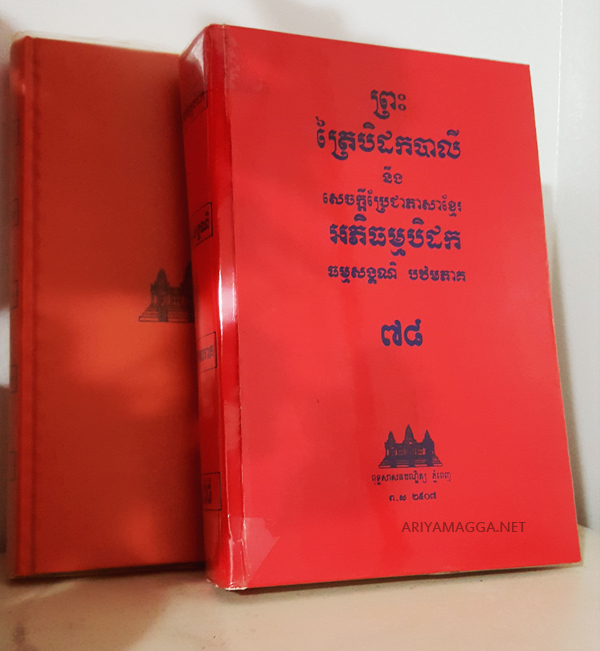
Khmer Tipitaka 1 – 110

 ព្រះត្រៃបិដក

ព្រះត្រៃបិដក ប្រែថា កញ្រ្ចែង ឬ ល្អី​ ៣ សម្រាប់ដាក់ផ្ទុកពាក្យពេចន៍នៃព្រះសម្មាសម្ពុទ្ធ

The Tipitaka or Pali canon, is the collection of primary Pali language texts which form the doctrinal foundation of Theravada Buddhism. The three divisions of the Tipitaka are: Vinaya Pitaka, Sutta Pitaka, Abhidhamma Pitaka.

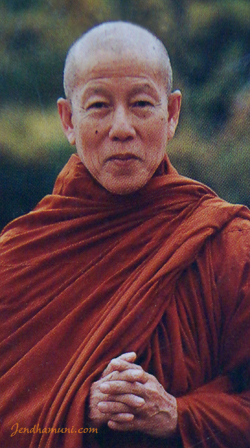
Maha Ghosananda

Maha Ghosananda

Supreme Patriarch of Cambodian Buddhism (5/23/1913 - 3/12/07). Forever in my heart...

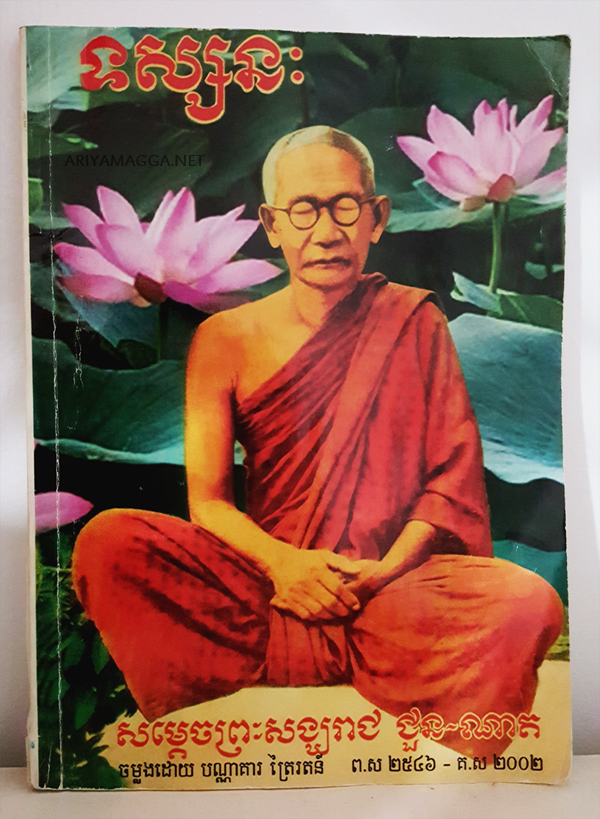
Samdech Chuon Nath

My reflection

វចនានុក្រមសម្តេចសង្ឃ ជួន ណាត
Desktop version

Listen to Khmer literature and Dhamma talk by His Holiness Jotannano Chuon Nath, Supreme Patriarch of Cambodia Buddhism.

Shantidevas’ Bodhisattva vows

My reflection

Should anyone wish to ridicule me and make me an object of jest and scorn why should I possibly care if I have dedicated myself to others?

Let them do as they wish with me so long as it does not harm them. May no one who encounters me ever have an insignificant contact.

Regardless whether those whom I meet respond towards me with anger or faith, may the mere fact of our meeting contribute to the fulfilment of their wishes.

May the slander, harm and all forms of abuse that anyone should direct towards me act as a cause of their enlightenment.

As a solid rock is not shaken by the wind, so the wise are not shaken by blame and praise. As a deep lake is clear and calm, so the wise become tranquil after they listened to the truth…

Good people walk on regardless of what happens to them. Good people do not babble on about their desires. Whether touched by happiness or by sorrow, the wise never appear elated or depressed. ~The Dhammapada

Hermit of Tbeng Mountain

Sachjang Phnom Tbeng សច្ចំ​​ ភ្នំត្បែង is a very long and interesting story written by Mr. Chhea Sokoan, read by Jendhamuni Sos. You can click on the links below to listen. Part 1 | Part 2

Beauty in nature

A beautiful object has no intrinsic quality that is good for the mind, nor an ugly object any intrinsic power to harm it. Beautiful and ugly are just projections of the mind. The ability to cause happiness or suffering is not a property of the outer object itself. For example, the sight of a particular individual can cause happiness to one person and suffering to another. It is the mind that attributes such qualities to the perceived object. — Dilgo Khyentse Rinpoche

Nature is loved by what is best in us. The sky, the mountain, the tree, the animal, give us a delight in and for themselves. — Ralph Waldo Emerson


Our journey for peace
begins today and every day.
Each step is a prayer,
Each step is a meditation,
Each step will build a bridge.

—​​​ Maha Ghosananda